
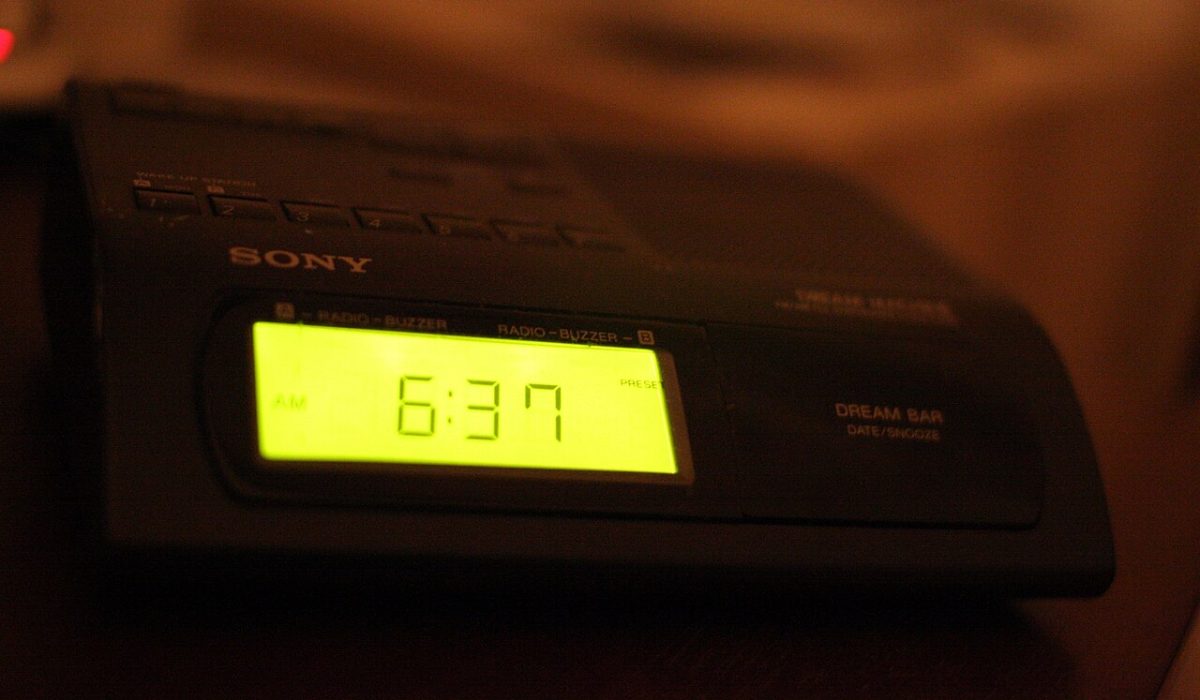
Your flight confirmation says 12:30 AM on Friday. Do you head to the airport on Thursday night or Friday night? Mistakes like that cost people real money, and they start with a simple question: is am morning or night? AM covers the twelve hours from midnight until just before noon. That includes all of the morning, but it also includes the dark hours most of us think of as night.
What AM stands for
AM is short for the Latin phrase ante meridiem, meaning “before midday.” PM is post meridiem, “after midday.” The whole system turns around noon, the point when the sun is roughly at its highest.
So 9:00 AM is nine hours after midnight and three hours before noon. At 12:00 noon the clock switches to PM, and it stays there until midnight, when a new day and a new set of AM hours begin.
When AM feels like night
Language and clocks don’t line up perfectly. At 2:00 AM it’s dark, the shops are shut and you’d probably say it’s the middle of the night. Technically it’s still AM, and the calendar date has already changed.
Most people start calling it morning somewhere around 4:00 or 5:00 AM. Someone who begins work at a bakery at 3:00 will say “three in the morning,” and that’s perfectly normal English too. Both ways of speaking are fine, because AM is a clock term and “night” describes how it feels.
The 12 o’clock problem
This is where the real trouble lives. 12:00 AM is commonly used for midnight, the very start of a day. 12:00 PM is commonly used for noon. Both labels are a bit odd when you consider the Latin, since noon is neither before nor after itself, but that’s the usual convention on phones and digital clocks.
The safest approach is to avoid them. Write “noon” or “midnight” instead. Midnight still has a catch, because “midnight on Friday” could mean the start or the end of Friday. Many contracts and event notices use 11:59 PM or 12:01 AM for that exact reason.
Back to that flight
12:30 AM on Friday is half an hour after Thursday ends. You’d go to the airport on Thursday evening. Arrive on Friday night and you’ve missed your plane by almost a full day.
Hotel bookings, medication times and alarms lead to similar mix-ups. An alarm set for 6:30 PM instead of AM is a classic, and it usually gets discovered when you wake up late.
The 24-hour clock as a backup
Hospitals, airlines, the military and much of Europe use a 24-hour clock, which removes the doubt. Midnight is 00:00, 9:00 AM is 09:00, noon is 12:00 and 6:00 PM is 18:00.
Converting is easy. Morning times stay the same from 1:00 AM on. For PM hours from 1:00 to 11:00, add twelve, so 3:15 PM becomes 15:15. Most phones will display this format if you change one setting, and it’s a good habit for anyone who travels.
Writing it correctly
You’ll see AM, a.m. and am. Style guides differ, so choose one and stick with it. Put a space between the number and the letters, as in 8:00 AM.
Don’t double up, either. “8:00 AM in the morning” repeats itself. Say “8:00 AM” or “8:00 in the morning.” If you’re checking other everyday terms that people mix up, compairro.com keeps the explanations brief.
The easy way to remember
Think of A as “after midnight” and P as “past noon.” They aren’t the real Latin meanings, but they point to the right half of the day. Everything from midnight to noon is AM, even when it’s pitch black outside, and everything from noon to midnight is PM. Read your tickets with that in mind and you’ll be there on the right day.